
Citizen engagement: from promise to practice
-
Chapter 1: Introduction2 Paragrafen
-
Chapter 2: Start with the right questions5 Paragrafen
-
Chapter 3: Designing the participation process6 Paragrafen
-
Chapter 4: Making participation succeed6 Paragrafen
-
Chapter 5: Understanding the impact of participation4 Paragrafen
-
Chapter 6: Skills, capacity, policies and governance needed4 Paragrafen
-
Chapter 7: Final thoughts1 Paragraaf
3.6: Multi-layered design
In practice, participation does not always follow the particpation spectrum step by step. Real participation processes are often more complex, and strong designs usually combine different levels of engagement within one broader strategy.
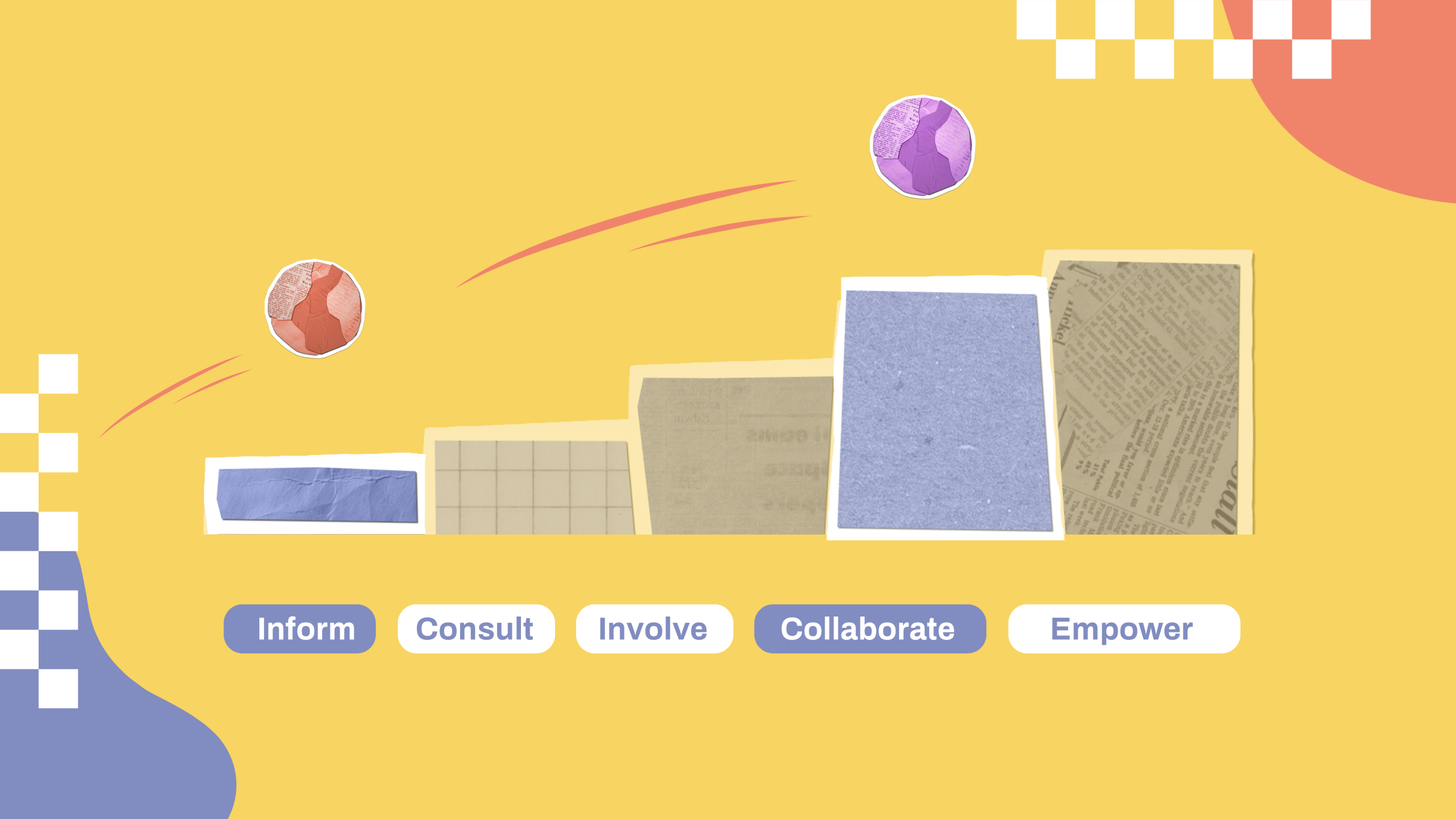
This is what we call a multi-layered design: using different participation methods at different moments, but connecting them through one shared participation framework.
You might inform citizens at the start of a project, consult them on specific questions, and then involve or collaborate with them more deeply in later phases. Each level can serve a different purpose, depending on the stage of the process, the people you want to reach, and the decisions that need to be made.
By combining methods thoughtfully, you can make the process more inclusive, more flexible, and more meaningful for everyone involved.
Mark from Mechelen

Example: local waste reduction plan
Imagine a city that wants to cut household waste by 30% in five years.
- Inform: The city shares the goal and the reasons behind it, with clear figures on current waste levels, through its website, local media and an info session.
- Consult: An online survey asks residents which measures they would support, and what makes reducing waste difficult in their daily lives.
- Involve: Workshops with residents, local shopkeepers and schools explore concrete ideas, such as repair cafés, reuse points or refill options in local shops.
- Collaborate: A citizens’ panel co-designs the final action plan with the city, and volunteer “waste ambassadors” help run a pilot in their own neighbourhood.
Each step uses a different method, but all of them feed into the same plan.