
Citizen engagement: from promise to practice
-
Chapter 1: Introduction2 Paragrafen
-
Chapter 2: Start with the right questions5 Paragrafen
-
Chapter 3: Designing the participation process6 Paragrafen
-
Chapter 4: Making participation succeed6 Paragrafen
-
Chapter 5: Understanding the impact of participation4 Paragrafen
-
Chapter 6: Skills, capacity, policies and governance needed4 Paragrafen
-
Chapter 7: Final thoughts1 Paragraaf
3.2: Consult citizens
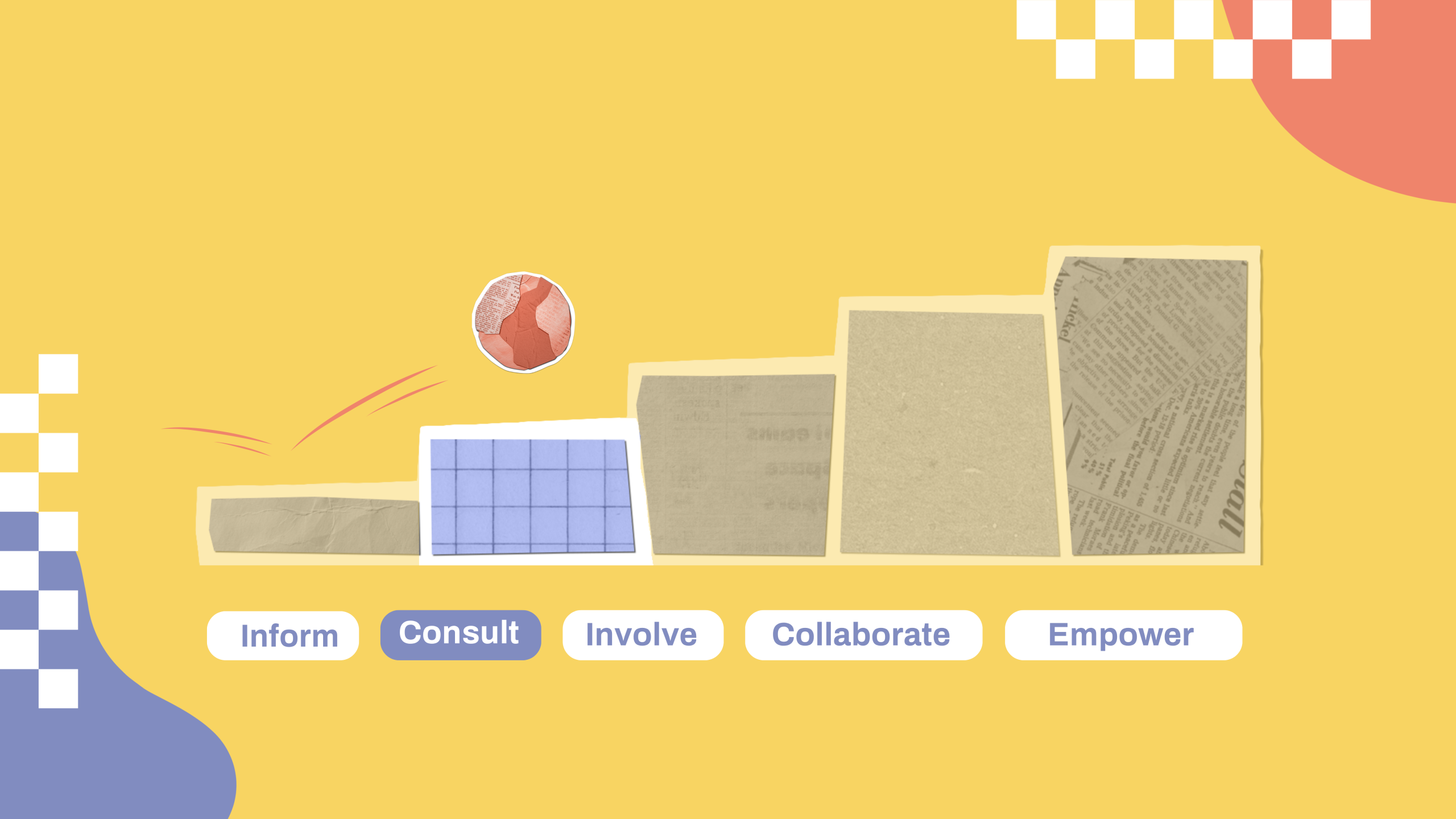
The next step on the spectrum goes one step further than simply informing citizens. It opens the door to citizens’ perspectives. Here, the focus shifts from only sharing information to asking people what they think, experience, need or worry about.

What's the main purpose?
To listen to citizens and learn from their perspectives.
What can you do?
Ask people to share feedback, concerns, ideas, needs or preferences on a clearly defined question, topic or proposal.
Why it matters?
It allows institutions or organisations to gather insights from citizens, identify potential issues, and test ideas or proposals to make better-informed decisions. When done well, consultation can improve the quality of decisions.
Your promise to citizens:
“We will listen to and acknowledge your concerns, while the final decision remains with the government or organisation.”
Lessons from the field
In this video, Jasmien (Roeselare) and Anne (Drenthe) on their experiences on consulting citizens.
Deep dive
Each partner case is described in full below. Dive in to see exactly how it played out on the ground.

Wij zijn Drenthe (We are Drenthe) - Province of Drenthe
Learn how Drenthe's provincial parliament is lowering the threshold for citizen participation through 'Wij zijn Drenthe'.
Citizen Panel for People-Centred Services - City Of Roeselare
Discover how Roeselare's Citizen Panel puts real user feedback at the heart of improving public services.
Name Wanted! - City of Oldenburg
See how Oldenburg's citizens helped name their new recreational area through the 'Name Wanted!' campaign.

Which concrete methods could you use?
- Online or paper surveys
- grassroots surveys or street interviews
- Public consultations or hearings
- Written submissions or feedback forms
- Focus groups
- Opinion polls
- Citizen panels (consultative)